
Adults may have a longstanding scoliosis or a curve recognized later in life. Rehabilitation commonly focuses on pain, movement, physical capacity and day-to-day function, with medical review when additional assessment is needed.
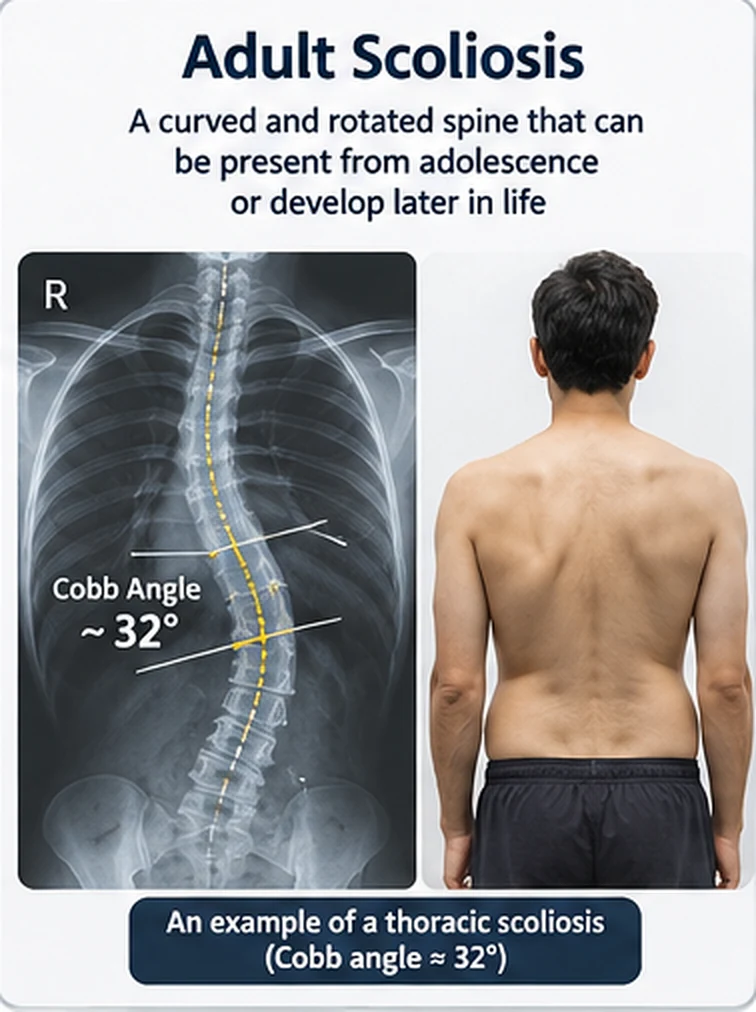
How is adulthood different?
After growth, treatment decisions and progression risks differ from those of adolescents. Pain and functional limitations may become more central concerns.
Will exercises straighten the curve?
It is important to distinguish symptom and function goals from a change in curve magnitude. Exercise may help with pain and movement in adults, but promising structural curve reduction is not appropriate.
When is specialist review important?
Worsening symptoms, new neurological changes or significant functional decline deserve an appropriate medical assessment.
The takeaway
The goal is more than an X-ray measurement. Individualized care can focus on living and moving better within the broader clinical picture.
Educational information only; it does not replace an individual clinical assessment. Diagnosis and treatment decisions require appropriate assessment and referral when necessary.