
A scoliosis-focused assessment considers the history, posture, movement, symptoms, available imaging when relevant, growth status and personal goals before an individualized rehabilitation plan is designed.
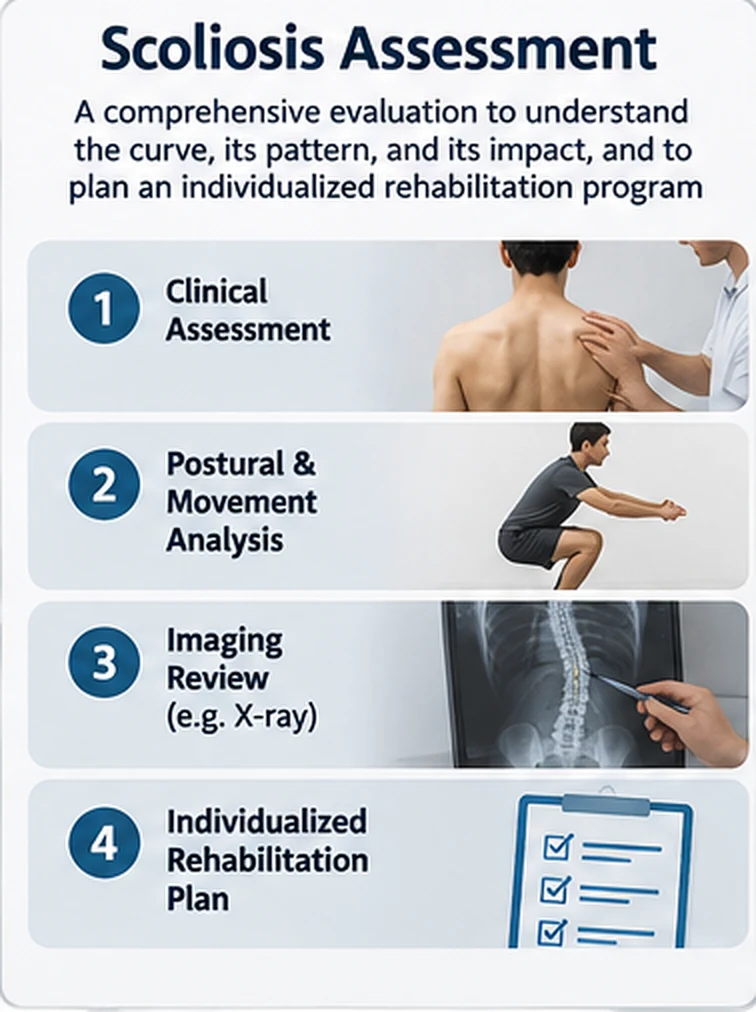
Understanding the story
We discuss when asymmetry was first noticed, existing symptoms, previous care, any brace or imaging information, and personal priorities.
Examining movement and function
Assessment may include trunk and shoulder symmetry, pelvic alignment, movement, function and other scoliosis-specific clinical measures. Additional measures depend on the individual.
Reviewing relevant imaging
Curve measurements and growth status can be important in scoliosis management. Imaging is not automatically required for every person and should follow clinical indications.
Designing and reviewing the plan
The plan defines meaningful goals, suitable exercises and how progress will be reassessed, including referral to other clinicians when appropriate.
Educational information only; it does not replace an individual clinical assessment. Diagnosis and treatment decisions require appropriate assessment and referral when necessary.